By Ellie S. (11th Grade)
Distinguished Professor Zang of School of Electrical and Electronic Engineering at Huazhong University of Science and Technology is a leader in the global power community, she also served as the Chair of the IEEE PES Women in Power (WiP) China Region.
Professor Zang’s expertise lies at the intersection of high-voltage engineering and smart grid resilience. Lets hear about her work on how intelligent power systems can empower society while mitigating the impacts of climate change.

In your area of expertise, what are some of the most promising innovations that can accelerate the transition to clear energy initiatives?
Professor Zang: Before addressing this issue, I would like to provide an example: I once studied the carbon footprint of a small substation and discovered that the most significant carbon emissions originated from various power equipment within the substation, followed by buildings and human activities. Therefore, we can preliminarily conclude that to reduce carbon emissions from industrial activities, we must first target emissions from various types of equipment by improving their efficiency, reducing operational losses, and enhancing their intelligence. Additionally, modularizing and standardizing construction projects, as well as substituting some operations with robots, could also contribute to emission reductions.
As evidenced above, some challenges are not solely technical. However, from a technical perspective, there is promising progress to report. For example, the performance of superconducting materials has advanced significantly, from early low-temperature superconductors requiring more than -200 degrees Celsius to current high-temperature superconductors operating above -20 degrees Celsius. If room-temperature superconductors or similar technologies can be realized, the transmission efficiency of the existing power grid would be greatly enhanced. Another promising development is small-scale nuclear fusion technology. Compared to large-scale projects like ITER, small tokamak devices offer better construction speed and iteration efficiency, making them more suitable for startups and increasing their feasibility. Furthermore, AI technology is improving control performance, and quantum communication technology has the potential to surpass the classical Shannon theory, overcoming the limitations of current 5G and even 6G technology. Success in these areas would significantly promote green and low-carbon development. Other notable technologies include hydrogen energy and solid-state battery technology, which I will not elaborate on here.
What specific actions can individuals take to support and contribute to global sustainability in their daily lives?
Professor Zang: We can find a group of people who share our interests and work together to advance the concepts of green, low-carbon, and environmental protection that we hold dear. For example, the IEEE PES Women in Power (WiP), where I am involved. This is a branch of IEEE, the world’s largest technical professional organization dedicated to advancing technology for the benefit of humanity. PES Women in Power fosters more diverse leadership by supporting the career advancement, networking, and education of women in the energy industry. Our goal is not merely to increase the number of women in the power industry but also to promote them into leadership positions.
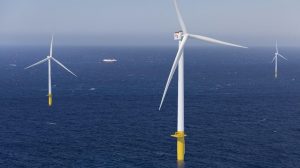
PES WiP serves ambitious, professional women in the power and energy industry who are seeking leadership positions and career advancement. The skills, networking, and mentorship opportunities offered benefit women across the industry, whether they are engineers, attorneys, policymakers, or accountants. In the first half of this year alone, we organized seven events in China, including academic lectures, forums, special essays, visits, and exchanges. For instance, earlier this month, I participated in a tour organized by this group to celebrate the 10th anniversary of the commissioning of the Zhoushan Five-Terminal DC Project, the world’s first five-section flexible DC transmission project. This experience deepened my understanding of the significant role flexible DC transmission technology plays in green energy, such as offshore wind power.
Furthermore, I believe that the academic work I co-edited on the Kunliulong hybrid DC transmission project, the world’s first ultra-high voltage hybrid multi-terminal DC transmission project, will also be valuable to researchers interested in the efficient transmission of new energy. I encourage everyone to join us and make progress together.
How can women bring unique perspectives and approaches to developing innovative solutions in the energy transition?
Professor Zang: There are many outstanding female scientists in human history from whom we should draw inspiration. For instance, Marie Curie, who won the Nobel Prize twice, and Wu Jianxiong, one of the world’s most distinguished female experimental physicists, exemplify the qualities we should strive to emulate.
I would also like to share two examples from my time as a visiting scholar at Lund University in Sweden last year. First, I began studying 5G technology to integrate it with my power technology research. To my surprise, I discovered in a textbook that the famous American actress Hedy Lamarr invented FHSS technology, which is still widely used in many communication protocols, including GPS, Bluetooth, Wi-Fi, and CDMA. Incredible and inspiring!
Another example involves Professor Anna Lucier, who will win the Nobel Prize in Physics in 2023. Her office was very close to mine, and during an academic lecture she gave for all students at the university, she humbly reviewed her academic career. Her modesty and achievements are of great reference significance to us, female scientists and technologists, engaged in energy research.
These examples underscore the importance of learning from the achievements and qualities of past and present female scientists as we advance in our own careers.
Closing Thoughts to the Students
Professor Zang: Do not be intimidated by the scale of the climate crisis. Instead, see the electrical grid as a living, breathing canvas. Stay curious and stay connected. The challenges of a climate-safer future are too large for any one person to solve alone. Build your networks, support your peers, and remember your technical skills are the most powerful tools we have to engineer a world that is clean, resilient, and inclusive for all.