Interviewed by Ellie S. (11th Grade)
We’re super excited because we just got the chance to interview Casey Kahalas for our latest club showcase on the Garden School Foundation! Casey shared some awesome insights into how gardening and community-led education are making huge impact on kids. It’s exactly the kind of real-world storytelling we love to highlight on ecolyst. Lets hear from her about the amazing work they’re doing!
What is the official name of the club, and what is your primary mission?
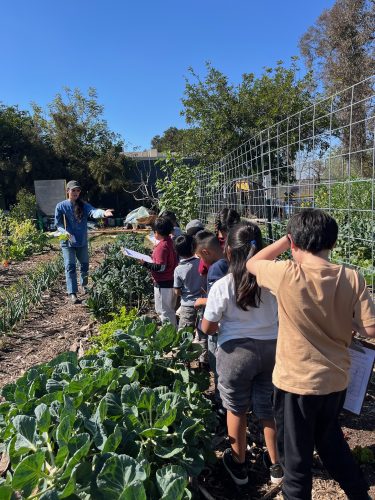
Casey K: Garden School Foundation provides in-depth garden-based education to youth at Title I schools in Los Angeles, strengthening connections between food justice, environmental stewardship, and community health. By using the full transformative potential of school gardens as teaching sites, we nurture a healthy and mindful generation of children who care for their bodies, their communities, and the earth.
How many members do you have, and what is the typical “vibe” of a meeting?
Casey K: We currently serve eleven Title I elementary schools in metro Los Angeles, reaching over 3,800 students and their families each year. Our staff consists of 27 team members and we also work with a dedicated network of interns and volunteers each school year.
What specific branches of science do you focus on (e.g., Biology, Robotics, Environmental Science)?
Casey K: Our Seed to Table curriculum comprises 120 grade-specific lessons developed with chefs, educators, nutritionists, parents, Master Gardeners, and community volunteers. Lessons are aligned with California state education standards and the national Next Generation Science Standards for elementary school grade levels. The science-based Garden Lessons focus on many branches of science including biology, environmental science, botany, entomology, and more. Our lessons cover such topics as growing and life cycles, plant structures, environmental sustainability, composting, garden maintenance, and urban garden wildlife.
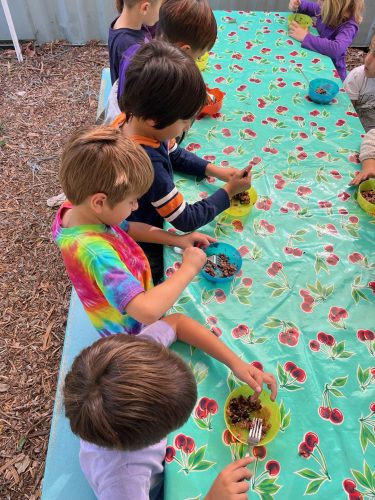
In Cooking Classes, students harvest from their own school gardens and then make every step of our 60 recipes – chopping, peeling, mashing and mixing their way to a shared meal. Cooking classes focus on nutritional themes such as “eat the rainbow,” as well as the cultural history and geography of the dishes and ingredients we use. We encourage “brave tasters,” often introducing a whole food or ingredient to students for the first time.
What is the most ambitious project the club has tackled this year?
Casey K: Last spring GSF won a Compost and Food Waste Reduction Grant for $400,000 in partnership with LA Unified School District and Crop Swap LA. This grant allowed us to expand our Cafeteria to Compost program to five additional GSF school sites over the past year.
What has been the club’s proudest moment in the last 12 months?
Some of our proudest moments in the past year have been adding a new school site to our network, expanding the Cafeteria to Compost program to 5 new sites, diverting over 40,000 lbs of food waste from landfill, and sharing over 89,000 lbs of food with our school families.
How does the club contribute to the local or the border community?
Casey K: Garden School Foundation is focused on improving access to green spaces and education on gardens and nutrition in historically underserved communities around our schools all throughout Los Angeles. Across our eleven gardens in Title I elementary schools, we host four key programs that each contribute to the local communities: Seed to Table (garden and nutrition education for students), Cafeteria to Compost (food waste education and composting for students): biweekly free Farmers Markets (serving our school families and communities), and monthly Community Garden Days (hands-on volunteer garden maintenance days open to the public).
What are the long-term goals for the club?
Casey K: Our long-term goals are to continue providing high-quality experiential education opportunities for students to learn about gardening, nutrition, and sustainability. We also aim to harness the untapped potential of school gardens as community resources that impact food access and access to green spaces for community members surrounding the school.
Anything else you would like to say to ecolyst.org readers?
Casey K: We’d love to have local readers join us in the garden for an upcoming Community Garden Day! The event schedule and more information can be found on our website here.
- www.gardenschoolfoundation.org
- Follow GSF on Instagram
- Give the Gift of Garden Education! Support GSF’s Annual Appeal!
Couple pictures provided by Casey.